
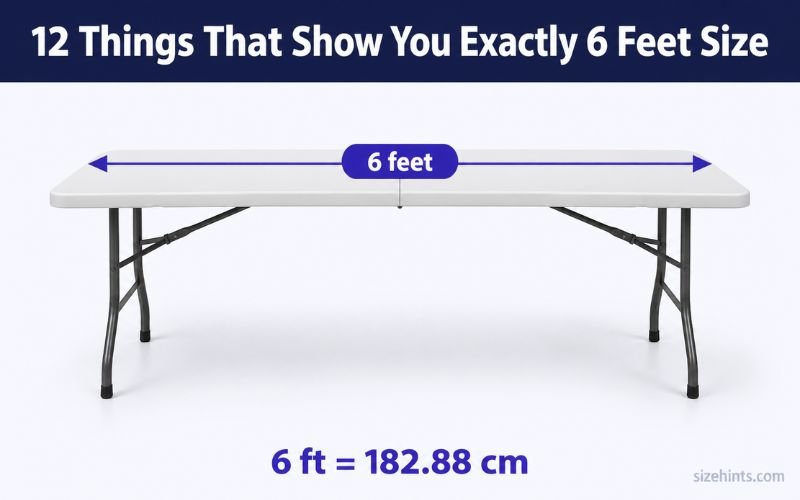
Six feet is a measurement you encounter in everyday life more often than you might realize. It is roughly the height of a tall adult, the length of a small sofa, or the width of some furniture pieces. But how long is 6 feet when you need to picture it without a measuring tape?
Understanding this length can help when shopping for furniture, planning a home improvement project, measuring a garden space, completing crafts, or arranging an office. It can also make school assignments and DIY projects easier because you can estimate distances more confidently. A few familiar objects provide useful reference points, making six feet much easier to imagine than an abstract number on a tape measure.
How Long Is 6 Feet?
6 Feet equals 182.88 cm and 1828.8 mm — about a doorway height.
How Long Is 6 Feet?
Six feet is a length equal to 72 inches, 2 yards, or approximately 1.83 meters. In metric measurements, it is about 183 centimeters. These conversions make it easier to compare six feet with objects measured in different units.
You may recognize this length in a tall person’s height, a long garden bench, or a standard six-foot folding table. It is also a practical measurement for checking whether a piece of furniture will fit against a wall or whether a particular space is wide enough for its intended use.
To imagine six feet, picture six sections of a standard 12-inch ruler placed end to end. Alternatively, think of two yardsticks aligned in a straight line. Both comparisons give you a clear sense of the distance without requiring you to convert measurements mentally.
Six feet can feel quite different depending on whether you measure upward, across a room, or along the floor. The direction changes how you perceive the length, even though the measurement remains the same.
6 Feet In Other Units
How Big Is 6 Feet?
Six feet is long enough to span a substantial portion of a bedroom wall, accommodate a tall adult’s height, or cover the length of a typical folding table. It is considerably longer than an ordinary school ruler and about twice the length of a standard yardstick.
One simple way to visualize it is to imagine three sheets of standard US letter paper arranged end to end along their 11-inch sides. Together, they measure 33 inches, which is less than half of six feet. You would need a little more than six such sheets to cover the full distance.
Your hand span can also help with rough estimates. If the distance from your thumb to your little finger when your hand is fully stretched is around 8 inches, approximately nine hand spans would cover six feet. Individual hand spans vary, so this works best as an estimate rather than an exact measurement.
For a more reliable mental picture, compare six feet with a folding table, a garden hose section, or a tall adult standing upright. These familiar references help turn the measurement into something you can picture in a real setting.
See 6 Feet on a Ruler
72.0 in12 Common Things That Are 6 Feet Long
Everyday objects make measurements easier to understand because you can picture their actual size instead of relying on numbers alone. The following examples include furniture, household items, tools, and other familiar references. Some are manufactured in an exact six-foot size, while others are available in six-foot versions or vary slightly by model. Check the stated dimensions before using any object as an exact measuring reference.
| Everyday Item | Actual Size |
| 1. Six-Foot Folding Table | 6 feet long |
| 2. Tall Adult’s Height | Approximately 6 feet |
| 3. Garden Hose Section | 6 feet long |
| 4. Six-Foot Extension Cord | 6 feet long |
| 5. Standard Yardstick Pair | 6 feet end to end |
| 6. Curtain Rod | 6 feet long |
| 7. Small Sofa | Approximately 6 feet wide |
| 8. Six-Foot Bookshelf | 6 feet tall |
| 9. Measuring Tape | A marked 6-foot span |
| 10. String of Six-Foot Length | 6 feet long |
| 11. Six-Foot Wooden Board | 6 feet long |
| 12. Six-Foot Decorative Garland | 6 feet long |
1. Six-Foot Folding Table
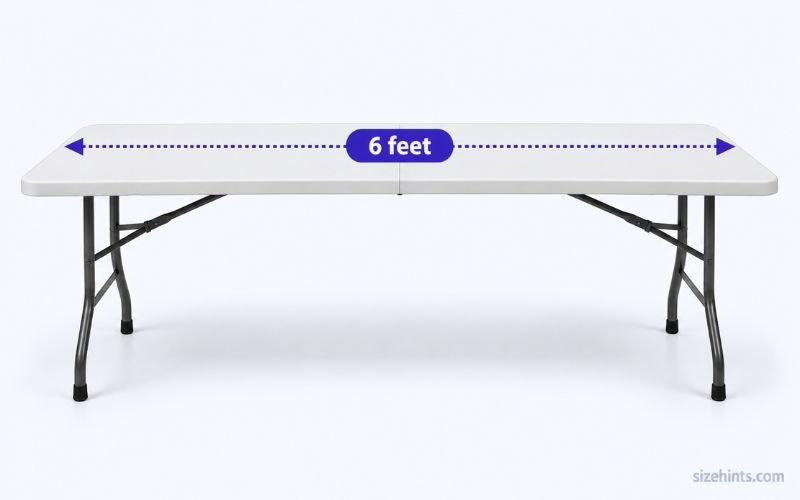
A six-foot folding table is one of the clearest examples of this measurement. Many common banquet tables measure approximately 72 inches long, which is exactly six feet. Their rectangular shape also makes the distance easy to see from one end to the other.
The tabletop is a useful comparison because you can observe its full length without estimating hidden sections. If you have access to one, stand beside it and look along the long edge. Its length gives you a practical reference for other furniture and household projects.
For example, when planning a family gathering, you can use a six-foot table to estimate how much space a dining or serving area needs. Remember that the table’s width and height are separate measurements; only its long side represents six feet.
Related Post: 10 Things That Show You Exactly 5 Feet Size
2. Tall Adult’s Height
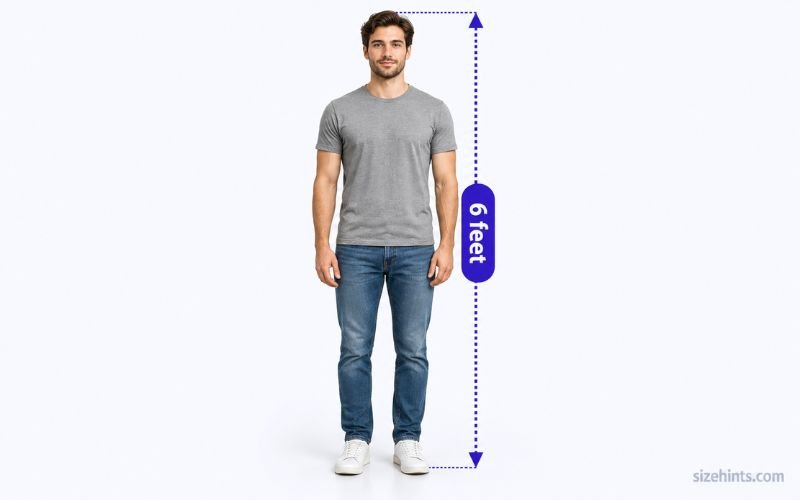
A person who stands six feet tall provides a familiar way to picture this measurement vertically. Six feet equals 72 inches, so a person of this height measures that distance from the floor to the top of their head when standing upright.
Human height is a helpful comparison because most people can imagine an adult standing in a doorway or beside a refrigerator. However, not every tall adult is exactly six feet tall, and posture, footwear, and individual proportions can affect a casual estimate.
If you are planning a room, for example, imagine a six-foot-tall person standing beneath a ceiling or beside a wall decoration. This helps you understand the vertical scale of the space. For accuracy, use the person’s actual measured height rather than assuming everyone who looks tall is six feet.
3. Garden Hose Section

A six-foot garden hose section is useful for visualizing a flexible length. Unlike a rigid board, a hose can curve around plants, garden beds, and outdoor furniture. When you straighten it on the ground, its end-to-end length shows what six feet looks like.
This comparison works particularly well for gardening because hoses are commonly used to estimate the distance between a water source and a plant container. A six-foot section can help you picture the reach needed for watering a small area.
For example, if you want to position a potted plant six feet from an outdoor faucet, a measured hose section can help you assess the distance. Keep in mind that a curved hose occupies a different amount of straight-line space. Straighten it when checking its actual length.
Related Post: 10 Things That Show You Exactly 4 Feet Size
4. Six-Foot Extension Cord

A six-foot extension cord is another familiar household reference. Its cable measures 72 inches from one end to the other when laid out straight, making it a convenient example of the measurement.
Extension cords are especially useful comparisons because people often use them to connect lamps, computers, chargers, and other electrical equipment. You can picture the cord stretching across a desk or between a nearby outlet and a device.
Suppose you are arranging a home office and need to decide whether a cord will reach your computer setup. A six-foot cord provides a clear reference for the available length, although the route around furniture may require extra cable. For electrical safety, use a cord suitable for the equipment and avoid stretching it tightly across walkways.
5. Standard Yardstick Pair

Two standard yardsticks placed end to end measure six feet. A yardstick is three feet long, so combining two gives you a total of two yards, or 72 inches.
This is a particularly useful comparison because yardsticks are designed for measuring. Their markings make it easy to understand where one foot ends and another begins. Aligning the ends carefully also demonstrates how smaller units combine into a larger measurement.
For a school assignment, for instance, you could place two yardsticks along a classroom wall to mark a six-foot section. This provides a visual demonstration of both feet and yards. Make sure the sticks meet without overlapping, because even a small gap or overlap can change the total distance.
Related Post: 12 Things That Show You Exactly 3 Feet Size
6. Curtain Rod

A curtain rod measuring six feet long provides a practical reference for home improvement. This length is equivalent to 72 inches and may suit certain windows or wider window treatments, depending on the installation.
The rod’s straight shape makes its length easy to visualize. If you are choosing curtains, comparing the rod with a six-foot measurement can help you understand the scale of the window area. However, the rod length should not automatically be treated as the exact width of the window, since curtain rods often extend beyond the frame.
For example, when shopping for curtains, measure the intended installation area before selecting a rod. A six-foot rod is a useful reference, but brackets, desired curtain fullness, and the width of the window all affect the final choice.
7. Small Sofa

Some compact sofas measure approximately six feet wide, making them a familiar furniture comparison. A sofa of this width can help you imagine the distance across a living room or along a wall.
Furniture is useful for visualizing length because it occupies a recognizable amount of space. You can picture a sofa positioned against a wall and compare its width with a six-foot section of floor. Still, sofa dimensions vary substantially by design, so this example is approximate rather than universal.
If you are furnishing a small apartment, a sofa around six feet wide may help you assess how much wall space to reserve. Remember to measure the actual furniture, including any arms that extend beyond the seat. Also leave enough room for walking paths and nearby doors.
8. Six-Foot Bookshelf
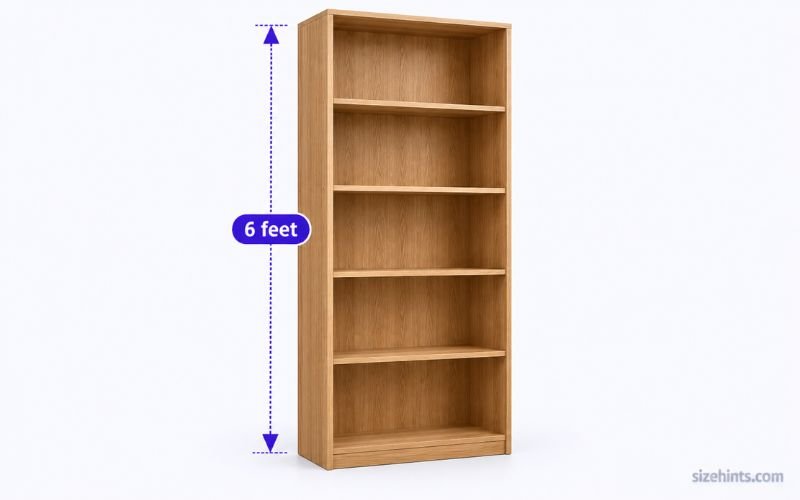
A bookshelf that stands six feet tall provides a vertical reference for the measurement. Its height is equivalent to 72 inches, allowing you to picture six feet from the floor to the top of the unit.
This is a useful comparison in homes, classrooms, and offices because tall bookcases are easy to recognize. You can compare the bookshelf’s height with a doorway, a desk, or a person standing nearby to get a better sense of scale.
For example, if you are choosing storage for a home office, imagining a six-foot bookshelf can help you assess how much vertical wall space the furniture will occupy. Actual models may be slightly shorter or taller, so check the manufacturer’s dimensions before buying or installing shelves.
Related Post: 10 Things That Show You Exactly 2 Feet Size
9. Measuring Tape
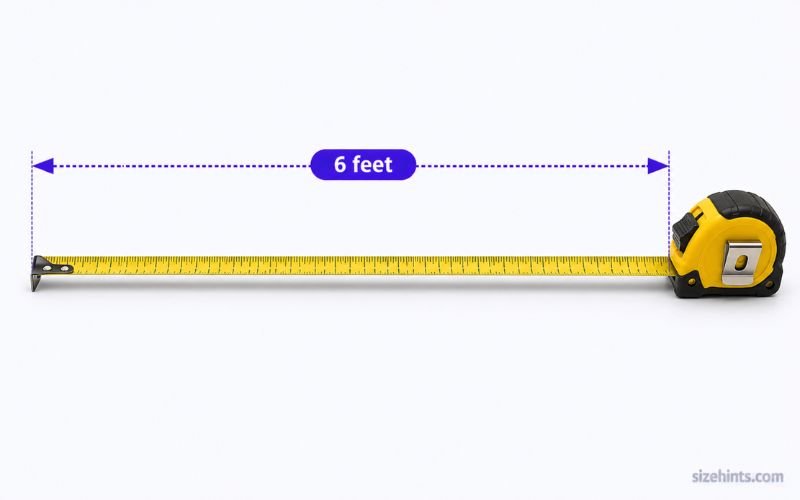
A measuring tape marked at six feet provides one of the most reliable ways to understand this length. Pull out the tape until you reach the 72-inch mark, keeping it straight and checking that you are reading the correct scale.
Unlike a sofa or an adult’s height, a measuring tape is specifically designed to show exact distances. It is particularly useful for confirming estimates made using everyday objects.
For instance, you can measure a six-foot stretch of floor before moving a cabinet or placing a desk against a wall. If your tape includes both inches and centimeters, you can also compare the same distance across measurement systems. Keep the tape flat and taut, but do not pull a flexible tape so hard that it stretches or shifts from its intended path.
10. String Cut to Six Feet

A piece of string cut to exactly six feet offers a lightweight and flexible comparison. Once measured, it can be placed along a table, across a floor, or around an area where a rigid ruler would be inconvenient.
String is especially helpful for crafts, decorations, and simple layout projects. You can use it to mark a distance without needing to carry a long board or measuring stick. However, it must be measured accurately before use, since an unmeasured piece of string has no dependable standard length.
For example, if you are planning a craft display, cut a string to 72 inches and use it to check the space available for a hanging decoration. Lay it straight when estimating length, as loops and curves can make the distance harder to judge.
Related Post: 10 Things That Show You Exactly 1 Foot Long Size
11. Six-Foot Wooden Board

A wooden board sold or cut to six feet long is a strong visual reference for this measurement. Its rigid shape makes it easy to compare the full distance with a wall, workbench, or other straight surface.
Boards are commonly used in carpentry, shelving, garden projects, and home repairs. Because lumber is available in different lengths, you can often find a six-foot piece or cut a longer board to the required size.
Imagine building a simple garden border or planning a shelf. A six-foot board can help you understand how much space the project will occupy before you begin cutting or fastening materials. Measure the actual board rather than relying on a store label alone, especially when precise dimensions are important.
12. Six-Foot Decorative Garland

A decorative garland measuring six feet long provides an easy way to visualize the measurement during celebrations or home decorating. Garlands are often used along mantels, railings, tables, and doorways, making them a familiar example of a measured decorative item.
Because garlands bend and drape, their total length is not always the same as the straight-line distance they cover when displayed. A six-foot garland laid flat measures 72 inches from end to end, but hanging it in loops will reduce the horizontal space it spans.
For example, if you are decorating a mantel for a holiday gathering, a six-foot garland can help you estimate the amount of material available. Check the product dimensions before purchasing, and allow extra length if you want a full, curved appearance rather than a tight, straight arrangement.
Frequently Asked Questions
1. How many centimeters is 6 feet?
Six feet equals 182.88 centimeters. For everyday estimates, you can round this to approximately 183 centimeters. This conversion is helpful when measuring furniture, checking a person’s height, or comparing products that list dimensions in the metric system.
2. What is exactly 6 feet long?
A six-foot folding table measuring 72 inches is a common example of something exactly six feet long. A measuring tape or a wooden board cut to the same length can also provide an exact reference. Always check the stated or measured dimensions because similar-looking objects may vary.
3. Is 6 feet considered long?
Six feet is a substantial length for many household objects. It is enough to span a typical banquet table, accommodate the height of a tall adult, or cover a noticeable section of a room. Whether it seems long depends on what you are measuring and the available space.
4. How do I measure 6 feet without a ruler?
Look for an object with a known length, such as a six-foot folding table or two three-foot yardsticks. You can also mark a measured six-foot string for future estimates. If accuracy matters, borrow a measuring tape instead of relying on body proportions or visual guesses.
5. What does 6 feet look like?
Picture a tall adult standing upright or a six-foot table stretching across a room. You can also imagine two yardsticks placed end to end. These comparisons help you understand the distance horizontally and vertically without having to picture all 72 inches individually.
6. What household object is 6 feet long?
A six-foot folding table, curtain rod, or extension cord can provide a useful household comparison. Their dimensions vary by model, so look for products specifically listed as 72 inches long. A six-foot bookshelf is another helpful reference when you want to visualize the measurement vertically.
7. How many millimeters is 6 feet?
Six feet equals 1,828.8 millimeters. This conversion is useful for detailed DIY work, construction, and technical measurements where millimeters are preferred. For ordinary household estimates, approximately 1,829 millimeters is a convenient rounded value.
8. What is the easiest way to visualize 6 feet?
The easiest method is to picture a six-foot folding table or two yardsticks aligned end to end. If you want to check the distance physically, use a tape measure to mark 72 inches on the floor. Having a familiar reference makes future estimates much easier.
Conclusion
Six feet is a practical measurement that becomes easier to picture when you connect it with familiar objects. A six-foot folding table gives you a clear horizontal reference, a tall adult helps you imagine the vertical distance, and two yardsticks show how the length adds up in smaller sections.
These comparisons are useful when arranging furniture, planning a DIY project, shopping for home accessories, or estimating space before making a purchase. Just remember that approximate objects are best for visualization, while a measuring tape is the better choice when accuracy matters. Once you have a few reliable references in mind, six feet stops feeling like an abstract number and becomes a distance you can recognize in everyday life.
Length Converter
Type any value — all units update instantly
