
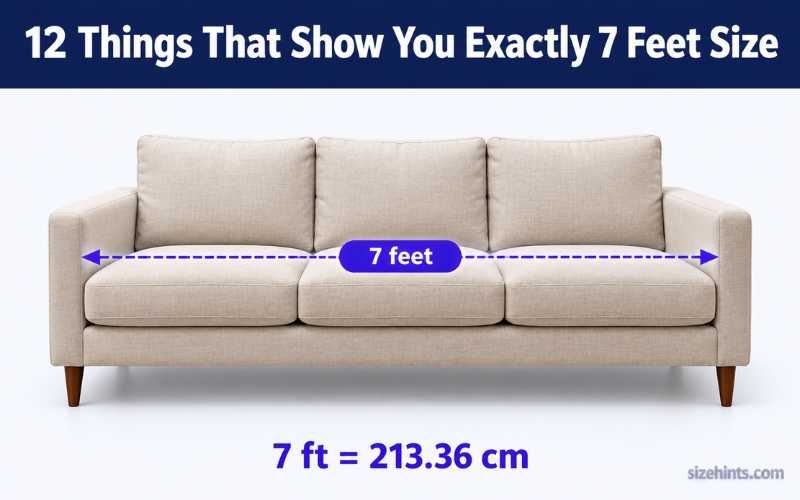
How long is 7 feet? Seven feet is a length of 84 inches, or approximately 2.13 meters. It is long enough to span a large sofa, cover much of a bedroom wall, or match the height of a tall bookshelf. Although the number may seem abstract, familiar objects make this measurement easier to picture.
You might need to estimate seven feet when shopping for furniture, planning a home improvement project, measuring a garden, or arranging an office. It can also help with school assignments, craft projects, and DIY work. A few everyday comparisons can give you a useful sense of this length before you reach for a measuring tape.
[Quick Answer Shortcode]
Related Post: 12 Things That Show You Exactly 6 Feet Size
How Long Is 7 Feet?
Seven feet is a substantial length for an everyday object or household space. It equals 84 inches and is just over two meters long. Picture a standard yardstick followed by another yardstick and an additional foot. Together, they give you a practical reference for the distance.
You may encounter this measurement in a long sofa, a curtain track, a piece of lumber, or a large recreational item. It can also describe the height of certain bookshelves or decorative structures, although the exact dimensions depend on the product.
Understanding this length is useful when deciding whether furniture will fit along a wall or whether a long object can be stored in a particular room. Rather than relying on appearance alone, compare the available space with a known seven-foot reference.
For accurate results, measure from one end to the other with a tape measure. Familiar objects help you estimate the distance, but their dimensions can vary between models.
[Conversion Table Shortcode]
How Big Is 7 Feet?
Seven feet is longer than most standard household rulers and noticeably longer than a typical yardstick. Imagine laying two three-foot measuring sticks end to end, then adding another foot. The result provides a straightforward visual reference without needing to picture every inch individually.
Your hand span can help with a rough estimate, too. If your fully stretched hand spans about eight inches from thumb to little finger, roughly ten and a half hand spans would cover seven feet. Since hand sizes differ, this is useful only for an approximation.
Paper can provide another comparison. A standard US letter sheet measures 11 inches along its longer edge, so seven feet is slightly longer than seven and a half sheets arranged end to end along those edges.
A phone or notebook is much shorter, so neither makes a practical single-object reference for this distance. Larger items, such as a sofa or a long wooden board, are easier to visualize because their overall size is closer to seven feet.
[Interactive Ruler Shortcode]
Related Post: 10 Things That Show You Exactly 5 Feet Size
12 Common Things That Are 7 Feet Long
Everyday objects make it easier to understand a measurement you cannot immediately picture. The examples below include furniture, household accessories, tools, and outdoor items. Some can be purchased in a seven-foot version, while others are approximate comparisons. Check the actual dimensions whenever precise measurements matter.
| Everyday Item | Actual Size |
| 1. Large Sofa | Approximately 7 feet wide |
| 2. Wooden Board | 7 feet long |
| 3. Curtain Track | 7 feet long |
| 4. Tall Bookshelf | Approximately 7 feet tall |
| 5. Garden Hose Section | 7 feet long |
| 6. Decorative Garland | 7 feet long |
| 7. Extension Cord | 7 feet long |
| 8. Dining Table | Approximately 7 feet long |
| 9. Pool Cue Storage Rack | 7 feet long |
| 10. Fabric Length | 7 feet long |
| 11. Freestanding Room Divider | Approximately 7 feet tall |
| 12. Measuring Tape Span | Marked at 7 feet |
1. Large Sofa
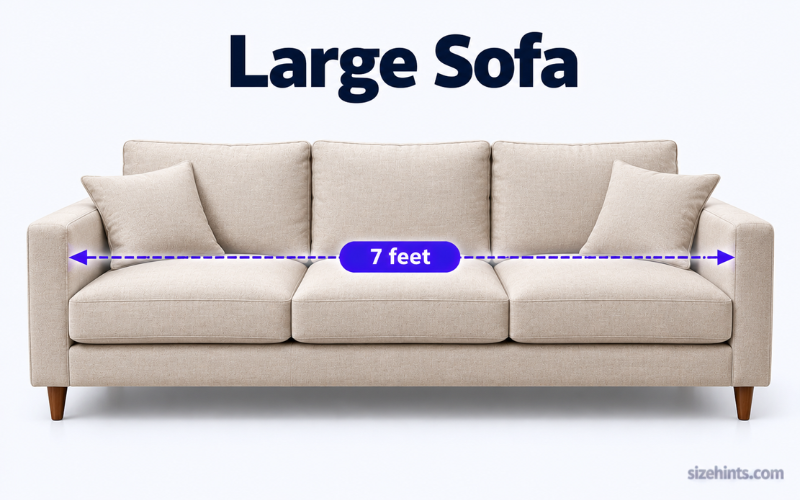
A large sofa measuring approximately seven feet wide provides a familiar way to picture this length. Many three-seat sofas fall within a broad range of widths, and some are close to 84 inches from one outer arm to the other.
A sofa works well as a comparison because its width occupies a noticeable amount of wall space. You can imagine the full distance across the front without needing to break it into smaller measurements.
For example, if you are shopping for a living-room sofa, visualize a seven-foot span along the wall where you plan to place it. Remember to account for nearby doors, side tables, and walking space. Not every large sofa is seven feet wide, so check the manufacturer’s specifications before making a purchase.
2. Wooden Board
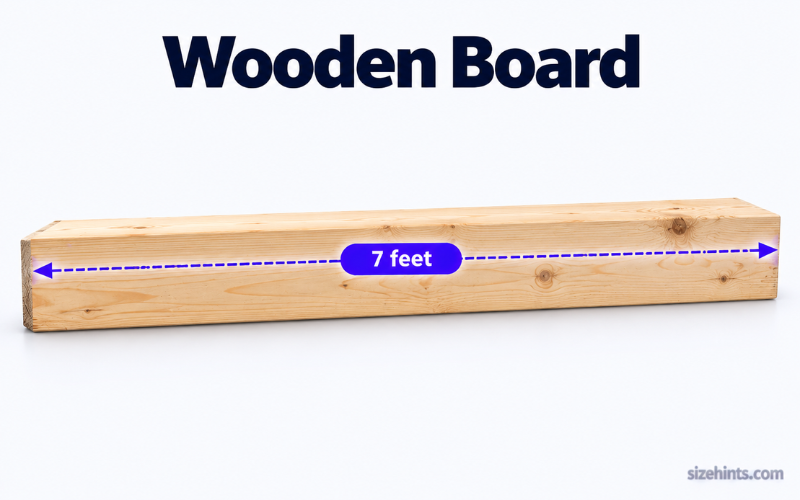
A wooden board cut to exactly seven feet long is one of the clearest references for this measurement. Its straight edges make the full distance easy to see, and its rigid structure helps you compare the length with walls, floors, and work surfaces.
You can use a board of this size when planning shelving, garden structures, or simple woodworking projects. If you already have a longer board, a tape measure can help you mark a seven-foot section before cutting.
For example, imagine installing a long wooden shelf support in a workshop. A seven-foot board gives you a practical sense of how much wall space the project may require. Lumber dimensions can differ from their nominal labels, so measure the actual piece before cutting or installing it.
3. Curtain Track
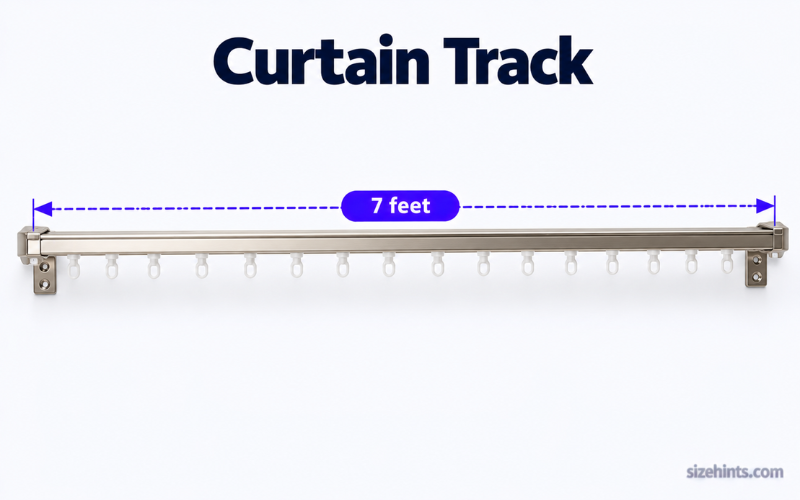
A curtain track measuring seven feet long provides a useful reference for home improvement. At 84 inches, it can span a wide window area or serve a larger opening, depending on the installation.
Its straight shape makes it easy to visualize the full length. You can hold a measuring tape along the intended installation area and compare the result with a seven-foot track before purchasing hardware.
For instance, when fitting curtains in a living room, you may need a track that extends beyond the window frame so the curtains can open fully. Measure the complete installation width rather than assuming the window itself should be seven feet wide. Tracks, brackets, and mounting arrangements can affect the final dimensions.
Related Post: 10 Things That Show You Exactly 4 Feet Size
4. Tall Bookshelf
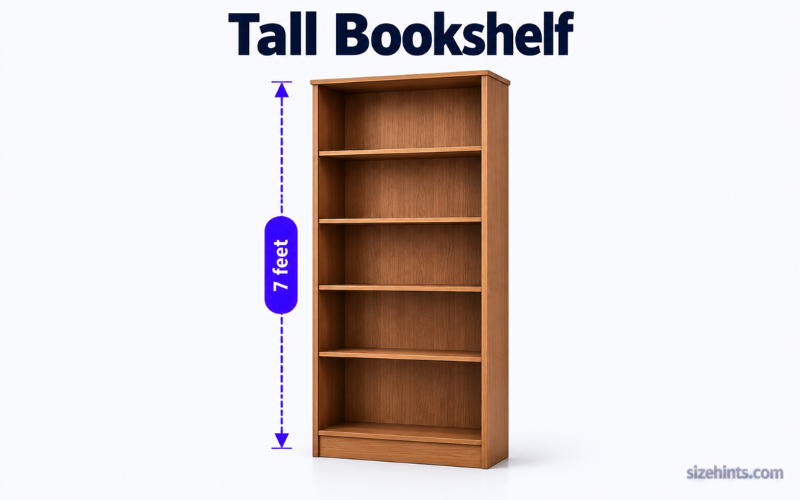
A bookshelf standing seven feet tall offers a helpful vertical comparison. Its height is 84 inches from the floor to the top, making it a substantial piece of furniture in a home, library, or office.
This example is useful because people often recognize the scale of a tall bookcase immediately. You can picture it beside a doorway or imagine how far above a desk its top would reach.
Suppose you are planning storage for a home office. A seven-foot bookshelf helps you estimate how much vertical wall space you need and whether the ceiling can accommodate it. Actual bookshelves vary in height, and some require additional clearance for assembly or anchoring. Measure the product before buying it.
5. Garden Hose Section
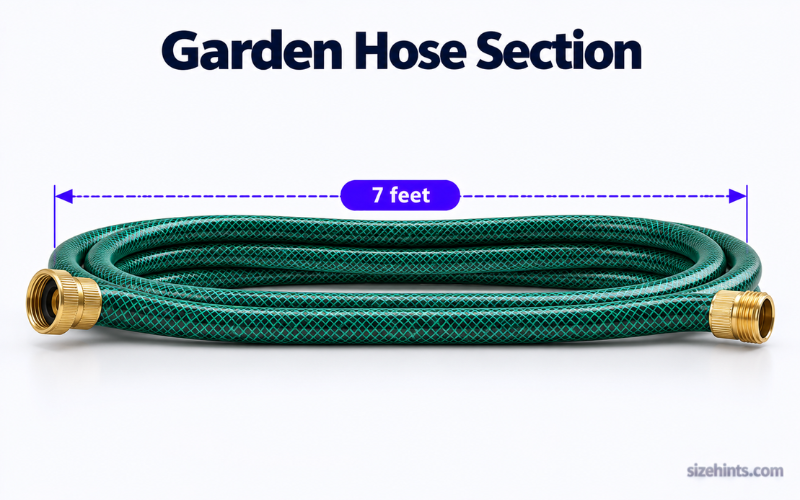
A seven-foot section of garden hose provides a flexible way to picture the measurement. When straightened on the ground, the hose extends 84 inches from one end to the other.
Hoses are familiar outdoor tools, and their flexibility makes them useful for checking distances around flower beds, pots, and garden paths. Unlike a wooden board, a hose can curve around obstacles, although its total length remains the same.
For example, if you want to estimate the distance between a garden tap and a nearby planter, a measured seven-foot hose section can serve as a reference. Lay it straight when checking the length. A curved hose may cover less straight-line distance, so do not judge its length from the area it occupies when coiled.
6. Decorative Garland
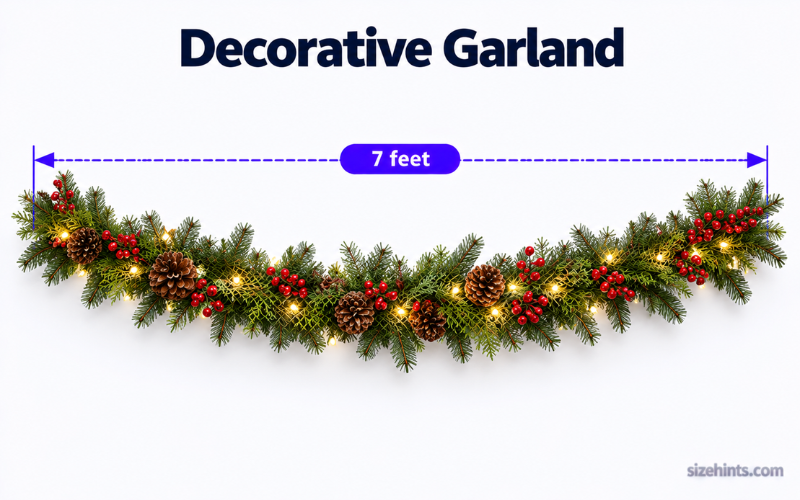
A decorative garland measuring seven feet long is a convenient reference for seasonal decorating and craft projects. Garlands may feature greenery, fabric, flowers, or other decorative materials, but their overall length can be measured in the same way.
This comparison works because a garland can be laid straight across a floor or table to reveal its full length. When draped over a mantel or doorway, however, curves and hanging loops reduce the horizontal distance it covers.
For example, if you are decorating a mantel, a seven-foot garland provides a starting point for estimating how much material you have. You may need additional length for a fuller appearance or for wrapping around the ends. Check the listed length before purchasing, especially if the decoration will follow a curved route.
7. Extension Cord
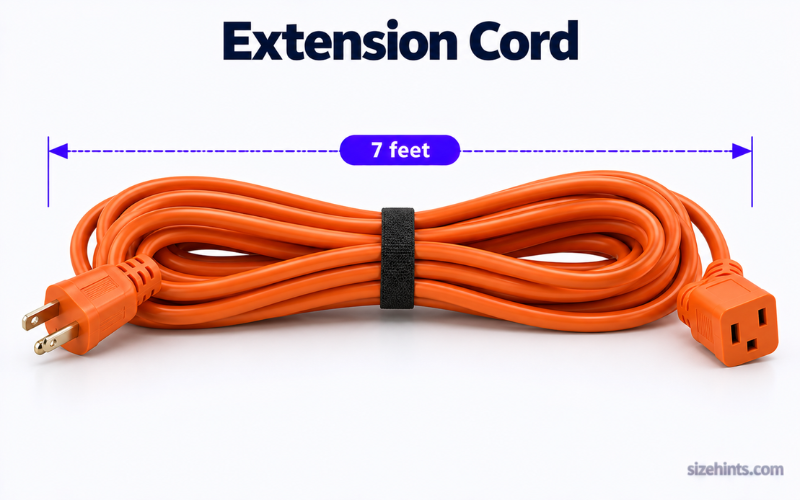
A seven-foot extension cord measures 84 inches from end to end when fully laid out. It is a useful comparison for household setups because cords are often used to connect equipment across short distances.
Picture a cord stretching from a wall outlet toward a desk or entertainment unit. Its length gives you a practical idea of how far the equipment can be positioned from the power source, although the route around furniture may require extra slack.
For example, when arranging a home office, a seven-foot cord can help you judge whether an outlet is close enough to your workstation. Choose a cord appropriate for the device and its electrical requirements. Avoid placing cords where they create trip hazards or running them under rugs where heat can accumulate.
8. Dining Table
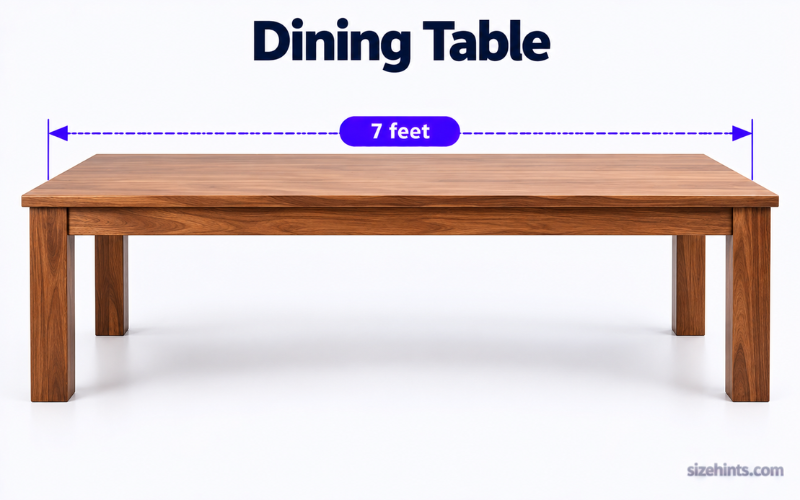
Some large dining tables measure approximately seven feet long, providing a helpful reference for a substantial horizontal space. Tables of this size may accommodate several people, depending on their width, design, and seating arrangement.
A dining table is easy to visualize because its long edges create a clear line from one end to the other. You can picture it against a wall or in the center of a dining room to understand the scale.
For example, if you are planning a dining area, compare the table’s length with the available floor space before buying it. Leave enough room for chairs to move backward and for people to walk around them. Table dimensions vary, so use the listed measurements rather than relying on the appearance of a photograph.
9. Pool Cue Storage Rack
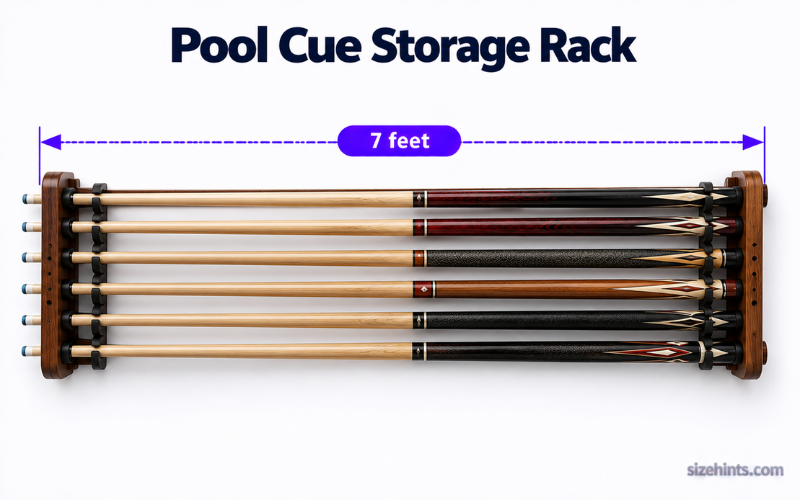
A long storage rack designed for pool cues can provide a useful reference for a seven-foot object when its measured length is actually seven feet. Pool equipment is often associated with long, narrow shapes, making it easier to imagine a distance extending across a wall.
This comparison is particularly helpful when planning a recreation room. A long rack or storage fixture can help you picture the space required for storing equipment horizontally.
For example, before installing a wall-mounted rack, measure the available wall area and compare it with the rack’s stated dimensions. Pool cues themselves are often shorter than seven feet, so the storage rack should be measured rather than assumed to match the length of the equipment it holds.
10. Fabric Length
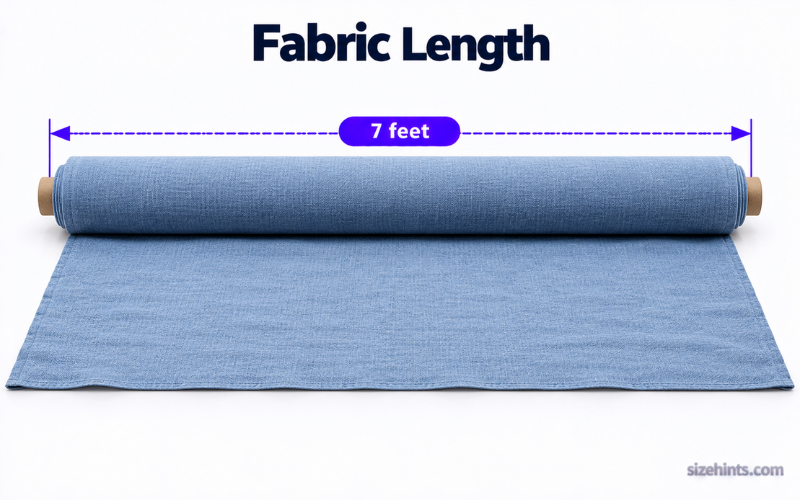
A piece of fabric cut to seven feet long is a simple and practical reference for sewing, upholstery, and decorating projects. It measures 84 inches along its length, regardless of the fabric’s width or pattern.
Fabric is useful because it can be spread across a table or floor to show the full distance. It also makes the measurement relevant to people working on curtains, table coverings, costumes, and other handmade items.
For example, if you are making a long decorative panel, mark a seven-foot section along the fabric before cutting. Allow additional material for hems, seams, or folds if the finished piece must reach a particular length. Fabric may shift or stretch while being handled, so smooth it out before measuring.
11. Freestanding Room Divider
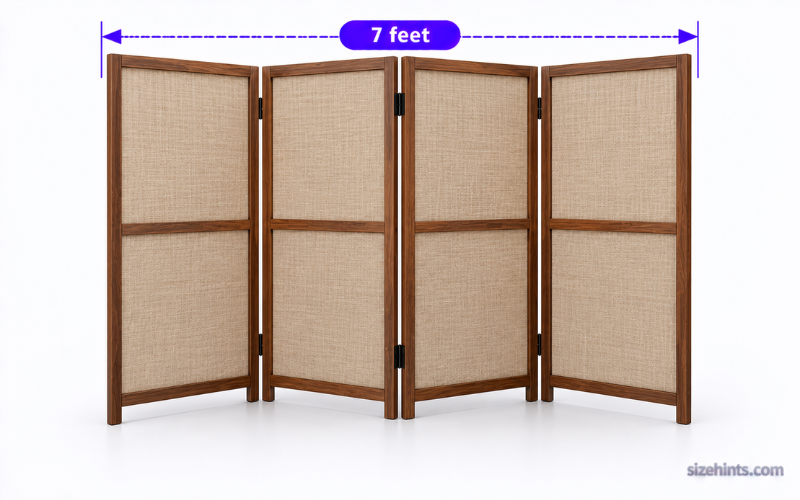
A freestanding room divider around seven feet tall provides a vertical comparison for this measurement. Such dividers can help separate areas in a studio apartment, office, or shared room without building a permanent wall.
Its height makes the scale easier to imagine than a small household item. You can picture a divider standing beside a desk or creating a visual boundary between two parts of a room.
For example, if you want to create a separate work area at home, a seven-foot divider could provide substantial visual separation if the ceiling and room layout allow it. Many dividers are shorter, so check the actual height. Consider stability, tipping risk, ceiling clearance, and the space required to move the divider into position.
12. Measuring Tape Span
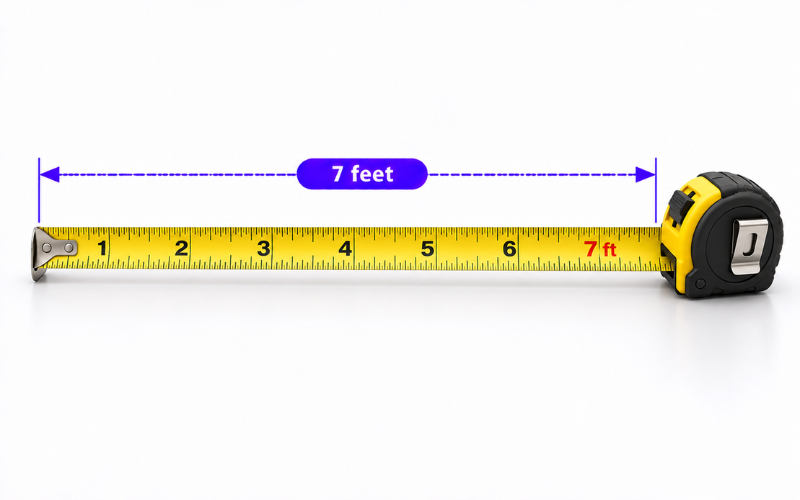
A measuring tape extended to the seven-foot mark is the most dependable reference in this list. It lets you see the distance directly instead of estimating from an object whose dimensions may vary.
Pull the tape straight and identify the 84-inch mark, or use a tape that displays feet and inches. This gives you an exact reference for checking furniture, marking a board, or measuring a section of wall.
For example, if you need to determine whether a cabinet will fit along a wall, mark a seven-foot span with your tape before moving the furniture. Keep the tape level and read the markings carefully. Everyday comparisons are useful for visualization, but a measuring tape is the better choice for a precise result.
Related Post: 12 Things That Show You Exactly 3 Feet Size
FAQs
1. How many centimeters is 7 feet?
Seven feet equals 213.36 centimeters, or approximately 2.13 meters. This conversion is useful when comparing furniture dimensions or product specifications that use metric units. For ordinary estimates, you can round the measurement to about 213 centimeters without changing the general sense of its size.
2. What is exactly 7 feet long?
A wooden board cut to 84 inches or a measuring tape stretched to the seven-foot mark can provide an exact example. Some curtain tracks, cords, and decorative items are sold in this length, too. Always check the stated dimensions because similar products may be shorter or longer.
3. Is 7 feet considered long?
Seven feet is a substantial length for many household objects. It is longer than a typical yardstick and can span a large sofa or a considerable portion of a room. Whether it feels long depends on the space and the object you are comparing it with.
4. How do I measure 7 feet without a ruler?
You can use a measured cord, a seven-foot board, or a combination of known-length measuring sticks. Two three-foot sticks plus a one-foot section make seven feet. If the measurement must be accurate for construction or furniture placement, use a measuring tape instead of relying on visual estimates.
5. What does 7 feet look like?
Picture a large sofa stretching across a living room or a tall bookshelf reaching well above a desk. You can also imagine two yardsticks placed end to end with another foot added. These comparisons help you picture the distance horizontally or vertically.
6. What household object is 7 feet long?
A large sofa may be around seven feet wide, while some curtain tracks, wooden boards, and extension cords are available in seven-foot lengths. These are helpful references, but their actual dimensions vary. Check a product’s measurements before using it as an exact example.
7. How many millimeters is 7 feet?
Seven feet equals 2,133.6 millimeters. For detailed woodworking, construction, or technical work, this conversion can be useful when plans use metric units. For everyday household estimates, approximately 2,134 millimeters is a convenient rounded value.
8. How do I visualize how long 7 feet is?
Imagine two standard yardsticks placed end to end, then add another foot. You can also picture a large sofa or a seven-foot wooden board. These examples provide a mental reference that is easier to remember than a number alone.
Related Post: 10 Things That Show You Exactly 2 Feet Size
Conclusion
A seven-foot length becomes much easier to picture when you connect it with familiar objects. Think of a large sofa spanning a living room, a wooden board laid across a work area, or a curtain track ready for installation. Each gives you a different way to recognize the same distance.
For a quick estimate, remember that seven feet is longer than two yardsticks placed end to end by one additional foot. Use that comparison when planning furniture layouts, garden projects, or craft work. When an exact fit matters, confirm your estimate with a measuring tape before cutting, drilling, or purchasing anything. A familiar reference helps you picture the space; a careful measurement helps you get it right.
